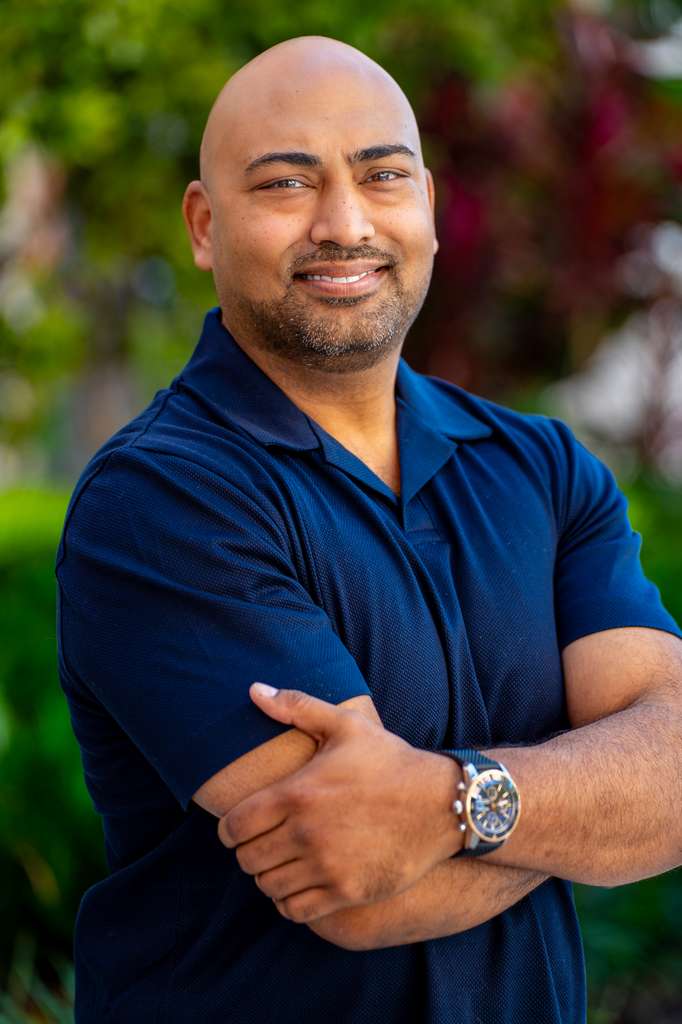
Medical boards have existed for over a century. They certify that a physician has met a standard of training and competence. What they do not certify — what no institution certifies — is whether the AI tools that physician relies on have met any standard at all. Anil Bajnath founded the American Board of Precision Medicine to close that gap.
ABOPM credentials clinicians practicing at the intersection of genomics, artificial intelligence, and personalized therapeutics. The distinction is not academic. A board-certified precision medicine physician who governs the AI in her workflow has an evidence chain, an audit trail, and a professional standard behind every output. A physician who prompts a chatbot has none of those things. One can survive a malpractice inquiry. The other cannot.
The credentialing network is also, by design, a distributed clinical research organization. Each certified clinician is a governed node capable of running clinical intelligence under the same architectural constraints. The network scales not by provisioning servers but by certifying physicians — and each new node inherits the full governance framework.
Dr. Bajnath brings the political and funding channels this work requires. His connections in Florida and Washington feed into the ARPA-H pipeline for federal research funding. His network reaches across the precision medicine ecosystem that OmicsChat serves, the multiomics domain where ungoverned AI is not merely inefficient but clinically unacceptable. CANONIC provides the governance architecture. ABOPM provides the clinicians. The convergence is what makes both of them work.